
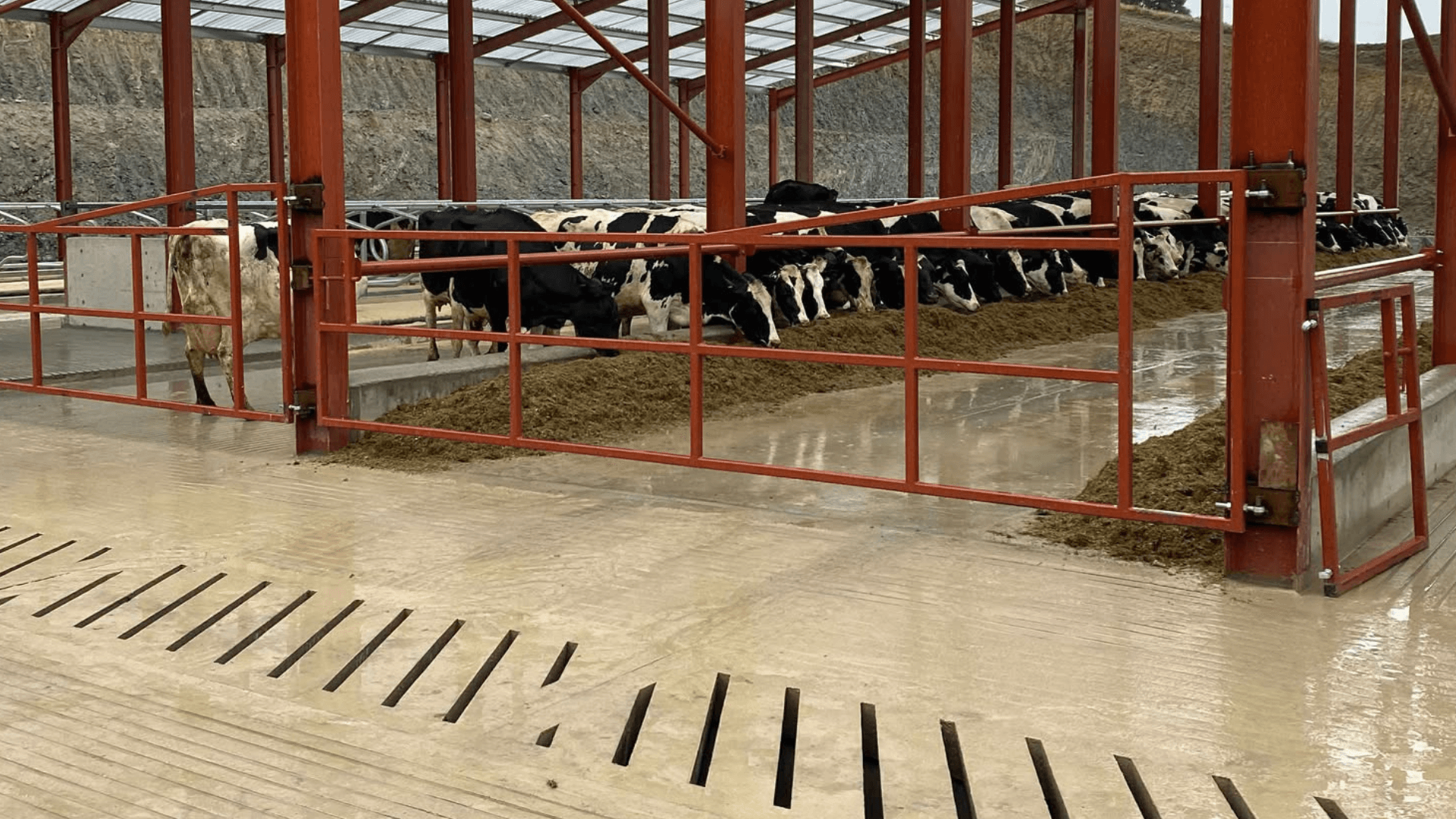
Why non-slip cow flooring is essential for herd safety
This article looks at why non-slip flooring matters, what your options are, and how to pick what works best for your farm.
Cow safety on UK farms is about more than welfare. It affects productivity every day. The environment shapes a cow’s health, behaviour, and what she produces. Yet time and again, one factor is overlooked: flooring. More specifically, non-slip cow flooring.
We’ve worked with farmers for years to make flooring that lasts and suits livestock. Our time making precast concrete for dairy and beef farms has shown us how important good grip is. It cuts injuries and helps the whole herd do better.
This article looks at why non-slip flooring matters, what your options are, and how to pick what works best for your farm.
The risks of poor cow flooring are too great to ignore
Most of us have seen a cow slip in the yard or refuse to walk into the parlour because the floor is too smooth. Rain, slurry, or worn concrete all make it worse. Slips cost money and harm cows.
Here’s what’s at stake when flooring doesn’t provide adequate grip:
Lameness – Even minor slips can cause strain or bruising in the hooves and joints. Over time, these injuries add up, leading to costly treatments or premature culling.
Stress and behavioural changes – Cows become cautious, walk with shortened strides, or avoid certain areas altogether, disrupting flow and reducing time spent feeding or lying down.
Reduced fertility – Injured or stressed cows are less likely to cycle regularly or stand for mating.
Lower yields – Discomfort and stress affect milk production, feed conversion, and overall performance.
With stricter welfare rules and more focus on farm safety, flooring should be seen as the base of herd health, not something to leave until last.
What makes cow flooring truly "non-slip"?
Many think rough concrete is always safe, but that’s not true. Traction depends on how the floor handles real use - wet, dirty, and with cows walking over it all day.
An effective non-slip cow flooring solution must offer:
- Consistent grip in all weather and conditions
- Comfort underfoot to reduce hoof fatigue
- Durability to withstand abrasion and cleaning
- Proper drainage to prevent pooling or surface slurry
- Even surfaces to avoid tripping risks
We’ve spent years improving our precast concrete to meet these needs. The goal is simple: cows should walk safely and confidently in busy areas like sheds, feeding passages, parlours, and yards. By providing consistent grip and comfort underfoot, our flooring solutions help cows move more fluidly and with less hesitation, reducing stress and encouraging longer lying times for better recuperation and overall herd productivity.
Where slips happen most and how to fix them
From our site visits and work across British farms, we know the hot spots where cow slips are most common:
- Parlour entries and exits: Sudden movement, narrow lanes, and wet floors increase the risk.
- Collecting yards: High stocking density and slurry buildup reduce traction fast.
- Feeding alleys: As cows crowd or jostle for feed, loss of grip can lead to collisions or falls.
- Cubicle passages: These areas are often overlooked during upgrades but play a key role in cow movement.
To tackle these issues, we design and supply textured concrete flooring with features like:
- Grooved rubber to channel liquid and boost hoof grip
- Diagonal or chevron patterns for multi-directional traction
- Integrated slopes and channels to aid slurry runoff
The goal isn’t to make it rough, it’s to make it functional, cleanable, and safe.
Not all non-slip solutions are created equal
There are a few main ways to make farm flooring non-slip. Each has pros and cons. Here are the main ones:
Traditional concrete slats
This remains the most widely used flooring option on farms – a durable reliable choice that performs well under daily traffic from cows and machinery. When finished correctly, traditional concrete provides dependable grip and is straightforward to clean, making it a long-established industry standard.
Pros:
✔ Long lifespan
✔ Robust under heavy axle loads
✔ Easy to clean
✔ Reliable performance in high-traffic areas
Cons:
✘ Depends on effective drainage design to keep floors dry
✘ Surface performance can decline as concrete naturally wears
AgriStride hybrid slats
AgriStride takes flooring a step further by combining optimum ratios of rubber with concrete to deliver greater comfort, cleaner floors and improved herd welfare. The rubber inserts offer consistent grip and natural movement, while multiple drainage holes speed up slurry dispersal, helping reduce surface-level ammonia emission by up to 60%. The inserts last a minimum of 10 years and can be swapped for different livestock needs without lifting the slat, offering long-term flexibility and cost efficiency.
Pros:
✔ Enhanced cow comfort and hoof health
✔ Cleaner, drier floors with rapid slurry drainage
✔ Up to 60% reduction in ammonia emissions
✔ Inserts replaceable without removing concrete slats
✔ Suitable for multi-animal environments
Cons:
✘ Higher upfront investment than standard concrete
✘ Optimal performance relies on selecting the right insert type for the animals housed
Rubber matting
Rubber mats are used where comfort or extra grip is needed, like in busy spots.
Pros:
✔ Softer underfoot
✔ Reduces pressure on joints
✔ Easily installed in cubicles or parlour entries
✔ Easy to retrofit in existing set-ups
Cons:
✘ Can wear, curl or shift over time
✘ Harder to clean
✘ Shorter lifespan
What to consider before you upgrade
Upgrading cow flooring is a significant investment. That’s why we advise farms to take a whole-system view, rather than focusing on just one surface.
Ask yourself:
- Where are slips happening? Focus your investment where risk is highest.
- Is your flooring draining properly? Even the best texture won’t help if the slurry pools and builds up.
- What’s your cleaning regime? Grooves that can’t be kept clean may cause more harm than good.
- How will flooring interact with existing infrastructure? Compatibility with scrapers, cubicles, and feed barriers is essential.
We often work closely with farm designers and contractors to ensure the flooring complements your shed layout, not conflicts with it. From custom slat sizing to layout advice, we aim to provide not just a product, but a solution.
Herd health and the bottom line
The link between cow comfort, mobility, and productivity is well-established. When cows move confidently and lie down comfortably, you get:
- Improved milk yields
- Fewer vet interventions
- Longer cow lifespan
- Better fertility rates
Non-slip flooring is not just about welfare rules. It protects your business. The costs of lameness, early culls, and lost production make safer flooring an easy choice.
The Wolfenden Concrete approach to safer flooring
We do more than supply concrete. We talk to farmers, vets, and builders to understand each site, then provide flooring that solves real problems.
All of our cow flooring slats are:
- Designed and manufactured in the UK
- Precision cast for uniformity and quality
- Reinforced and load-rated for heavy agricultural use
- Available with various surface finishes for targeted grip
If you’re building new or upgrading, we can give advice based on real experience to help you choose what’s right for your farm.
Build herd safety into your foundations
Today, safety and welfare are expected in UK farming. If you want a productive herd for the future, your flooring must be safe, not just strong.
Good non-slip flooring reduces injuries, helps cows move more easily, and improves health and yields. We offer flooring that gives grip, is easy to clean, lasts, and is made for UK farms.
If your cows are slipping, or you want flooring that works as hard as you do, contact us. We can help make your next step safer.
FAQs
1. What type of concrete finish is best for non-slip cow flooring?
A hybrid slat such as AgriStride is ideal, offering grip and comfort in multiple directions while remaining easy to clean. At Wolfenden Concrete, we supply slats with various groove patterns tailored to specific applications.
2. How long does concrete flooring last?
With proper installation and use, high-quality precast concrete flooring can last decades, even under constant use.
3. Is non-slip flooring necessary for dry cow or youngstock housing?
Yes. All ages and stages of cattle benefit from stable footing. Young or pregnant animals are particularly vulnerable to slips, so proper flooring is crucial.
4. Can Wolfenden’s slats be used in retrofits?
Absolutely. Our precast slats can be installed into existing buildings, often without major structural changes. We offer advice on fitting and layout.
5. Is there a minimum area I should upgrade if cows are slipping?
While full upgrades are ideal, targeting key high-risk zones - like parlour entries or collecting yards - can provide immediate benefits.