
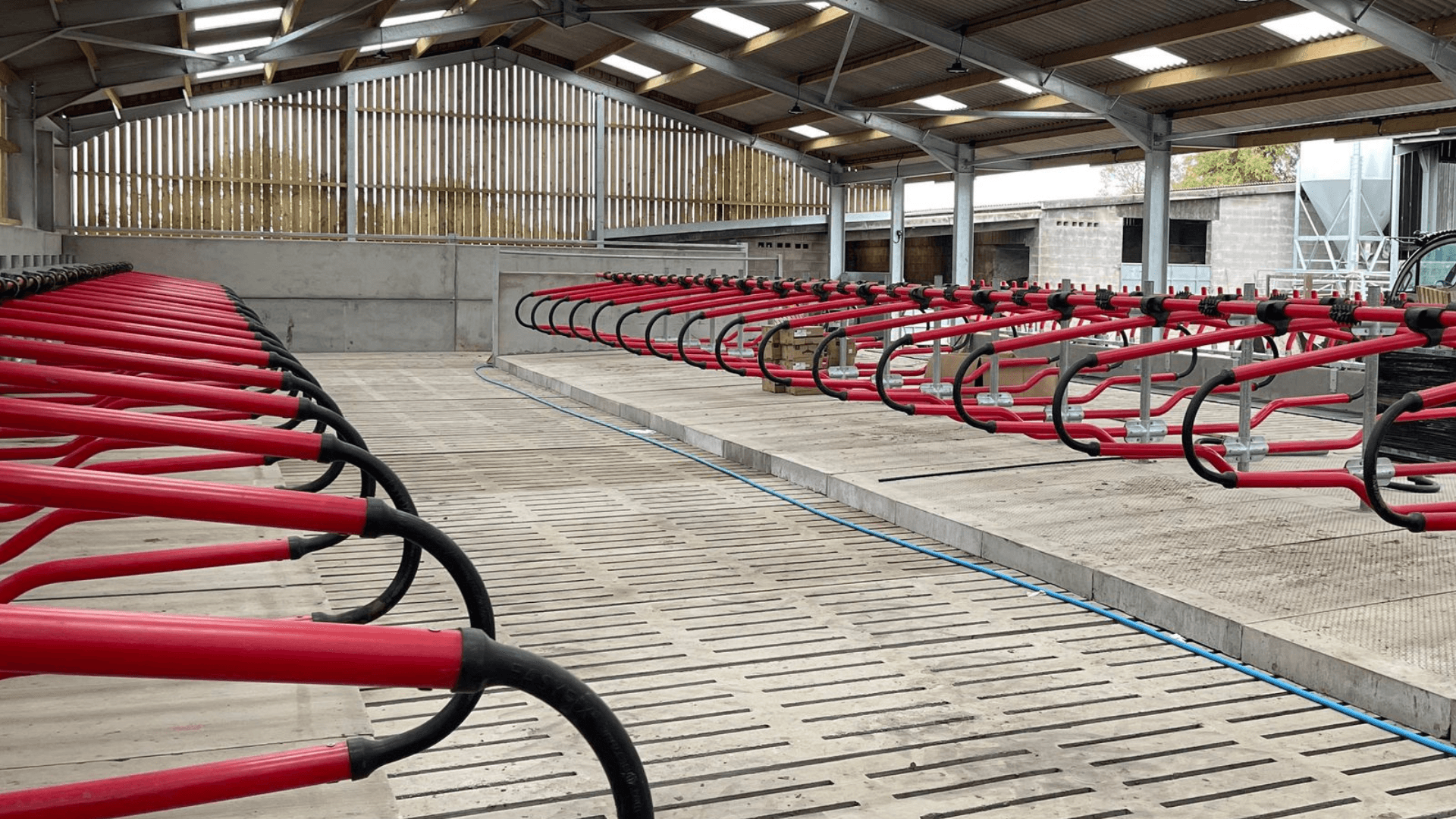
Why dairy farms need slip-resistant concrete to protect cattle
From wet yards to high-traffic loafing areas, slip risk is part of daily dairy life. This blog breaks down how slippery surfaces form, what makes good slip-resistant concrete, and how AgriStride compares to other flooring options used on UK farms.
In dairy farming, the details of livestock housing matter for herd health and efficiency. Flooring is often overlooked, but it has a direct impact on cow comfort, movement, and productivity. Consider this: poor flooring can result in an average 15% loss in milk yield. The right concrete is not just a hard surface; it supports how cattle move and behave.
Dairy cattle are on the move throughout the day, walking between cubicles, feed areas, and parlours. These areas are often wet and dirty, and if the flooring is not properly designed, they become a safety risk. Imagine a cow navigating a slippery, wet passage and suddenly halting in hesitation, uncertain of its next step. This moment of indecision is not just a simple pause; it echoes a risk that farmers know all too well. When cows are not steady on their feet, they may hesitate, avoid certain spots, or move unpredictably, increasing the risk of injury.
Safe flooring is important for both animal welfare and farm finances. If cows move less easily, milk yield, fertility, and herd longevity can all suffer. That is why slip resistance is now a basic requirement for livestock housing.
This blog covers the following topics:
- How slippery surfaces develop in dairy environments
- Why slip-resistant concrete is essential
- What defines high-quality slip-resistant concrete?
- Wolfenden Concrete’s specialised approach for UK farms
- AgriStride: advanced slip-resistant flooring for dairy farms
- How AgriStride compares to other flooring options
- Choosing the right concrete for farms: key factors
- FAQs
How slippery surfaces develop in dairy environments
Slippery floors on dairy farms are a normal result of daily activity, not neglect. Water, slurry, feed waste, and constant hoof traffic gradually smooth the concrete. As the surface wears, it loses grip.
This is when problems begin. A slip can cause bruises, leg injuries, sprains, or lameness. Lameness is expensive for dairy farms, leading to lower milk production, lower conception rates, higher vet costs, and sometimes early culling.
A single case of lameness can cost hundreds of pounds, and repeated cases add up quickly. It is easier and more cost-effective to prevent slips than to deal with the results.
Slip-resistant flooring is necessary for herd health, farm safety, and profitability.
Why slip-resistant concrete is essential
Properly designed slip-resistant concrete gives cattle the traction they need, even in wet or dirty areas. Hybrid flooring combines the strength of concrete with the comfort and grip of rubber, giving cattle safer and more natural movement in every part of the shed.
The rubber inserts in the AgriStride system provide exceptional traction, helping cows stay secure even in wet, high-traffic or heavily contaminated areas. This reduces the risk of slips, encourages confident walking, and supports better rumination and mobility, key drivers of herd productivity and welfare.
But traction is only part of the story. Hybrid floors also play a major role in improving hygiene and environmental performance. The AgriStride inserts are engineered with a high density of drainage holes and, in the Vario system, chevron layouts that channel slurry efficiently into collection systems. This keeps the walking surface drier, reduces bacterial buildup, and supports healthier hooves by limiting exposure to slurry-related conditions such as digital dermatitis.
By combining durable concrete with long-lasting, easily replaceable rubber inserts, hybrid flooring delivers a cleaner, safer and more stable environment, helping farmers reduce vet bills, protect hoof health, and improve overall dairy efficiency.
Standard smooth concrete is not made for farms. It wears down fast, gets polished by hooves, and can become slippery in a short time. Textured concrete is built to last for years under these conditions.
What defines high-quality slip-resistant concrete?
Not all slip-resistant concrete works the same way. The quality of farm flooring depends on three main factors:
Insert design
The performance of a hybrid floor starts with the engineering of the rubber inserts. In AgriStride, features such as optimal surface texture, secure grip, and in the Vario system, chevron-pattern layouts ensure cattle have confident, natural movement while slurry is channelled efficiently away from the walking surface. The high density of integrated drainage holes accelerates liquid dispersal, helping to keep floors cleaner and significantly reduce emissions.
A well-designed insert must balance grip with hoof comfort, providing traction without causing wear or pressure points.
Long-term durability
Hybrid flooring must withstand not only the weight and movement of cows but also the demands of modern dairy equipment. The AgriStride range pairs long-lasting rubber inserts with robust concrete slats, delivering strength where it is needed and cushioning where it supports welfare. The concrete remains in situ for decades, while the inserts, engineered for a minimum 10-year lifespan, maintain their performance without breaking down under moisture, chemicals or continual mechanical abrasion.
Installation quality
Unlike on-farm poured surfaces, AgriStride is manufactured in a controlled precast environment, ensuring predictable quality, precision and consistency. This eliminates variations in texture or finish that can lead to performance issues over time. Farmers also gain the flexibility to replace or swap inserts without disrupting the concrete base, maintaining uniform performance across the entire shed.
A good slip-resistant floor should work well across the whole area for years, not just months.
Wolfenden Concrete’s specialised approach for UK farms
Farmers in the UK face unique challenges in maintaining safe, productive environments for their cattle. Wolfenden Concrete understands these challenges and offers a specialised approach to help farmers succeed. By focusing on precast concrete solutions specifically designed for agricultural projects, Wolfenden Concrete empowers farmers to enhance cattle behaviour, housing, and overall farm operations.
Our precast method avoids the problems of on-site pouring. Each panel is made under controlled conditions, ensuring consistent insert patterns and durability. This makes floors safer for cattle and more cost-effective for farmers over time.
Precast panels are quick to install, cause little disruption, and wear predictably over time.
AgriStride: advanced slip-resistant flooring for dairy farms
Wolfenden Concrete’s AgriStride range is built for high-traffic livestock areas, combining the strength of precast concrete with the comfort and traction of engineered rubber inserts. This hybrid design delivers reliable grip, better hygiene, and long-lasting durability.
The insert layouts are shaped around cattle movement data, supporting natural hoof placement and giving cows a steadier, more confident stride. This reduces slips, keeps animals calmer in busy areas like collecting yards and parlour entrances, and promotes overall welfare.
Designed for the wet and muddy conditions common on UK farms, AgriStride’s inserts retain their performance far longer than traditional concrete textures. Their built-in drainage features help keep surfaces cleaner and drier, improving hoof health and simplifying daily wash-downs.
As AgriStride is a precast system, every slat offers consistent quality and low maintenance. Strong, easy to clean, and future-ready, AgriStride is a reliable, cost-effective flooring choice for modern dairy farms.
How AgriStride compares to other flooring options
When choosing concrete for farms, it makes sense to compare options. Many alternatives do not last as long or perform as well over time.
Soft but slippery: rubber matting
Rubber mats can make floors more comfortable but overtime they stretch and reduce grip in busy areas.
Quick-fix cuts: retrofitting grooves into existing concrete
Cut-in grooves can help for a while but wear down quickly, especially where cows turn or gather. This creates an uneven surface that needs frequent maintenance.
Built-for-purpose: precast slip-resistant slats
AgriStride and other precast systems last longer, give steady traction, and perform predictably. They are made for farm use, not adapted from general concrete.
Precast slip-resistant flooring is the most reliable and future-ready choice for dairy farms.
Choosing the right concrete for farms: key factors
When upgrading or installing new livestock flooring, farmers should think about:
Herd size and traffic flow
Bigger herds need flooring that can handle more weight and provide better grip.
Location within the farm
Parlour entrances, collecting yards, and feed passages get the most wear and need the best slip-resistant surfaces.
UK welfare standards
As cow comfort and mobility become more important, choosing good flooring helps meet Red Tractor and other standards.
Long-term infrastructure planning
Investing in strong, precast flooring lowers future maintenance costs and reduces disruption.
Choosing good slip-resistant concrete protects cattle, improves farm efficiency, and helps keep herds healthy and productive.
Slip resistance in dairy flooring is a fundamental part of cattle welfare and farm productivity. With the constant moisture, movement, and wear experienced on UK dairy farms, standard concrete simply can’t keep up. Purpose-built solutions like Wolfenden Concrete’s AgriStride offer the durability, traction, and hygiene performance needed to protect cattle and support smooth day-to-day operations.
For farms aiming to future-proof their infrastructure, reduce injuries, and improve herd flow, investing in high-quality, slip-resistant precast flooring is a smart, long-term decision.
FAQs
1. What makes AgriStride better than traditional concrete?
AgriStride combines the strength of precast slats with the comfort and traction of engineered rubber inserts. This hybrid design gives cattle a safer, more cushioned walking surface with consistent grip in all conditions, something concrete alone cannot achieve. The inserts also improve hygiene through rapid drainage and can be replaced or swapped as needed, providing longer-lasting performance and far greater flexibility than standard poured concrete floors.
2. Can AgriStride be installed in existing buildings?
Yes, precast slats can be installed in both new builds and retrofit projects with minimal disruption.
3. Will slip-resistant concrete reduce lameness?
While no flooring can eliminate lameness entirely, high-traction surfaces significantly reduce slip-related injuries and movement stress, thereby helping lower the overall incidence.
4. How long does precast slip-resistant flooring last?
With proper installation, AgriStride slats offer long-term durability and maintain their grip for many years, even under heavy traffic.
5. Is slip-resistant flooring suitable for all livestock?
Although designed for dairy cattle, it is also beneficial for beef units and other livestock in walkways, requiring secure, hygienic flooring.