
Why dairy farmers are looking beyond rubber cow mats
Rubber cow mats have long been a familiar feature in dairy housing. They can provide a softer surface than bare concrete and may improve comfort in certain settings.
But for many farms, the real question is bigger than whether a mat feels softer underfoot. It is whether the entire flooring and bedding system helps cows move confidently, stay cleaner, and remain healthier over time.
Farmers who start searching for alternatives to rubber cow mats are often responding to practical, everyday problems across the shed. It may be cows slipping in high-traffic areas, wet patches that are difficult to manage, or ongoing concerns around hoof health, lameness and hygiene. In those cases, simply swapping one surface layer for another may not get to the root of the issue.
That is why it makes sense to look beyond mats alone and assess the broader range of bedding and flooring solutions available. The right choice depends on the shed's area, how cows use that space, and the outcomes the farm is trying to improve.
The Main Alternatives to Rubber Cow Mats
When dairy farmers look beyond rubber cow mats, the main alternatives usually fall into a few broad categories: deep-bedded straw, sand bedding, mattress systems with loose top bedding, and integrated hybrid flooring.
Deep-bedded straw is still widely used because it creates a soft, comfortable sleeping surface. It can work well for rest and welfare, but it also requires regular topping up, careful management and close attention to cleanliness. Sand is another popular option, particularly in cubicle systems where comfort is a priority. Yet it can bring its own challenges around slurry handling, machinery wear and day-to-day management.
Mattress systems with sawdust or other loose bedding sit somewhere in the middle. They can provide a cushioned base while allowing farmers to add top dressing for comfort and hygiene. However, they still rely on consistent maintenance to perform well over time.
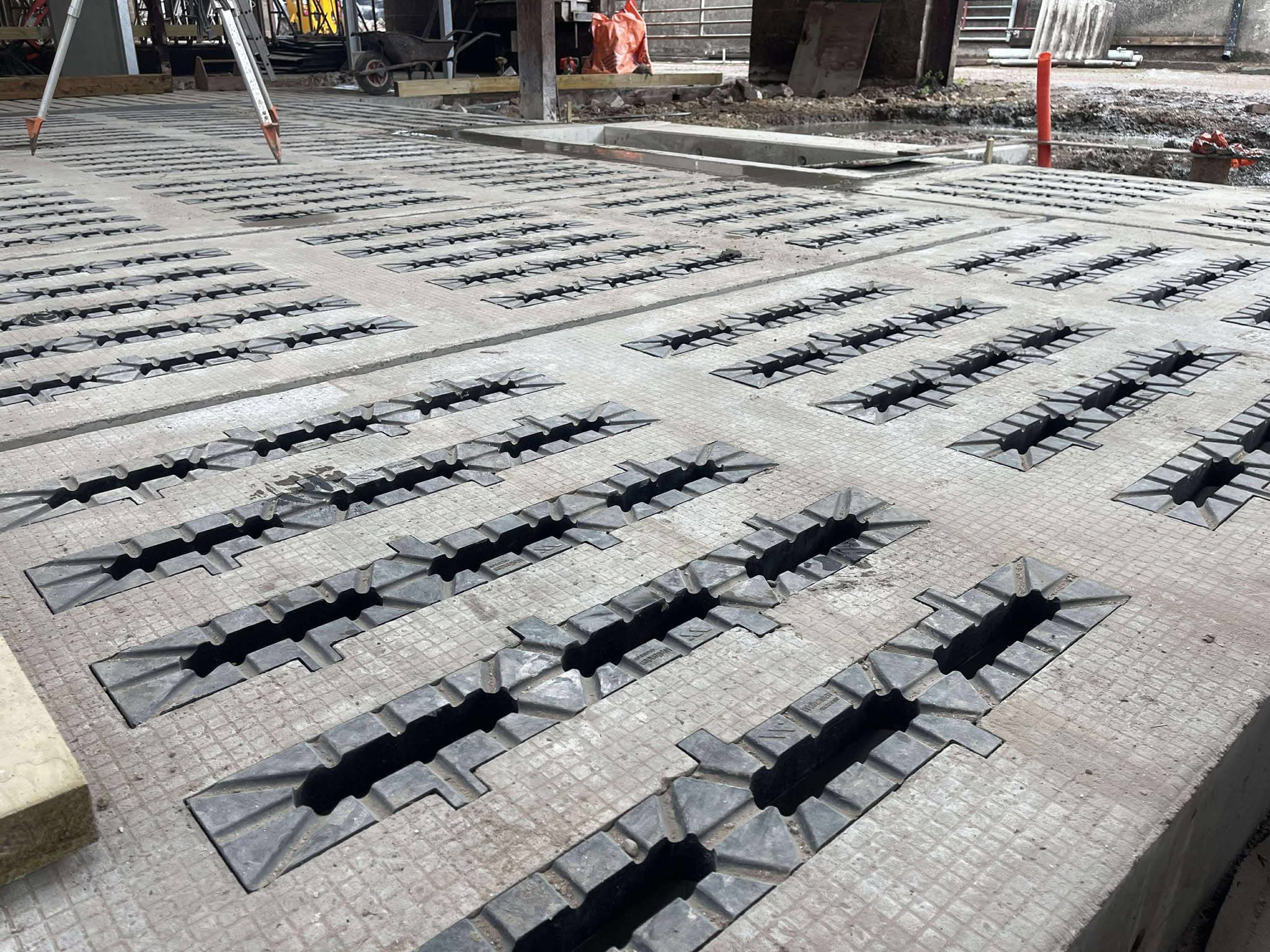
Then there is hybrid flooring, which offers a different option. Rather than acting as a simple add-on, it is designed as part of the working floor itself. At AgriStride, our systems combine the durability of concrete with slip-resistant rubber to support safer movement, better hoof health and cleaner shed performance.
Why the Best Option Depends on the Shed Area
One of the most important points in any flooring discussion is that not every part of a dairy shed should be treated the same. A cubicle lying area has different demands than a scrape passage, parlour exit, or collecting yard. That means the best alternative to rubber cow mats will depend on exactly where the surface is being used.
Traditional bedding systems, such as straw and mattresses, are often chosen for cubicles and resting spaces to improve lying comfort. That is entirely appropriate. But many of the day-to-day problems farmers experience happen in movement-heavy areas, not where cows lie down. If cows hesitate in passages, shorten their stride on the way to the parlour or lose confidence in race channels, changing bedding in the cubicles will not solve those issues on its own.
At AgriStride, we focus on area-specific flooring because cow movement matters just as much as lying comfort. A good floor should help cows walk naturally, stay steady underfoot and move through the shed with confidence. In practical terms, that often gives farmers a more effective long-term solution than simply replacing one mat with another.
How Hybrid Flooring Differs From Rubber Cow Mats
The key difference is simple: rubber cow mats are usually applied as a surface layer, while hybrid flooring is built into the floor system itself. That distinction has a major impact on how the floor performs.
At AgriStride, our hybrid systems combine strong concrete with integrated rubber inserts. This creates a floor designed not just for softness, but also for grip, durability, cleaner operation, and natural cow movement. The aim is to support hoof health, reduce the risk of lameness and help improve everyday shed performance.
This shifts the conversation away from comfort alone. Dairy floors also need to stay practical in demanding working environments. They must cope with scraping, moisture, traffic and the daily realities of modern livestock farming. Rubber mats can play a role in some situations, but they are often still an overlay solution. Hybrid flooring differs because it is engineered into the floor, not added after the fact.
For farmers comparing long-term options, hybrid flooring is a more integrated alternative, especially in areas where traction, hygiene, and durability need to work together.
Where AgriStride Fits as an Alternative to Rubber Cow Mats
AgriStride Classic is designed for standard cattle passageways, where reliable footing and herd welfare are essential. It helps support natural movement, reduce lameness risk and keep the shed cleaner and safer in daily use. For farms currently relying on rubber mats in general passage areas, Classic offers a more integrated alternative.
AgriStride Moov is intended for movement-heavy zones such as race channels and other areas where cattle flow and grip are especially important. In these locations, the real challenge is often confidence underfoot rather than bedding. A movement-led flooring system can therefore be far more relevant than a traditional mat.
AgriStride Vario is suited to wide or scrape passages, where both cow movement and efficient cleaning are critical. Its design supports more natural strides, improved welfare and faster day-to-day maintenance. In wider layouts, that makes it a practical alternative to rubber cow mats where hygiene and flow need to work hand in hand.
What Farmers Should Compare
When assessing alternatives to rubber cow mats, the most useful question is not simply which option feels softest. A better approach is to ask which system supports the outcome the farm actually needs.
If the goal is improved lying comfort in cubicles, loose bedding systems may still be central to the answer. But if the aim is to improve grip, reduce slipping, support hoof health and keep working areas cleaner, then an integrated flooring system may offer greater long-term value.
Flooring should always be considered in relation to welfare, hygiene and labour efficiency. Poor grip can contribute to lameness, stress and reduced cow confidence. Wet or underperforming floors can increase workload and make the whole shed harder to manage. The strongest alternative to rubber cow mats is therefore often the option that improves the overall environment, not just the surface feel.
Conclusion
Dairy bedding alternatives to rubber cow mats are not limited to one solution. Straw, sand and mattress-based systems all have a place, particularly in lying areas where rest and comfort are the priority. But many housing challenges arise in passageways, movement routes, and other working zones, where bedding alone is not the answer.
We believe dairy farmers benefit most when the conversation moves beyond mats and looks at the full flooring system. Our hybrid solutions combine concrete strength with slip-resistant rubber to support safer movement, healthier hooves, cleaner surfaces and more effective daily operation. For many farms, hybrid flooring is a stronger, more practical long-term alternative to standard rubber cow mats.
FAQs
What are the main alternatives to rubber cow mats?
The main alternatives include straw bedding, sand, mattress systems with loose bedding, and integrated hybrid flooring systems.
Are rubber cow mats suitable for every area of a dairy shed?
Not always. While they may suit some locations, movement-heavy areas often benefit more from flooring designed specifically for grip, cow flow and cleaning performance.
What makes hybrid flooring different from rubber cow mats?
Hybrid flooring is built into the floor system itself, whereas rubber cow mats are usually added as a surface layer on top of an existing base.
Can hybrid flooring replace rubber cow mats in passages?
Yes. In passageways, race channels and wide scrape areas, hybrid flooring can provide a more integrated solution that supports both cow movement and hygiene.
Is the best alternative to rubber cow mats the same for every farm?
No. The right option depends on the shed layout, herd needs, traffic levels and the function of each area within the building.