
Cattle flooring: Types, layouts, materials, and practical use
Flooring comes up all the time when we work on cattle housing projects. Sometimes it’s for a new build, but more often, it’s because something isn’t working as it should. Maybe cows are slipping in certain spots, there are wet patches that won’t go away, or the floor just isn’t holding up to daily use.
From a practical point of view, cattle flooring needs to do three things well: it needs to support animal welfare, fit how the shed is actually used, and last long enough to make the investment worthwhile. Here, I’ll go through the main types of cattle flooring for dairy and beef sheds, how layout makes a difference, what materials are used, and how these systems hold up in real, everyday use.
Why Flooring Has Such a Direct Impact on Cattle Welfare
Cattle are in contact with the floor almost all the time. Whether they’re standing, walking, turning, lying down, or getting up, it all depends on how the floor feels. If the flooring makes them hesitate, feel uncomfortable, or lose their footing, you’ll see it quickly in their behaviour and, over time, in their health.
From what we see on farms, flooring-related issues often include:
- Reduced cow confidence in passages
- Increased slipping in wet or high-traffic areas
- Excessive hoof wear or softening
- Difficulty keeping floors consistently clean
Usually, these problems don’t come from just one thing. It’s often a mix of flooring type, surface finish, drainage, and layout not working well together.
Types of Cattle Flooring Used in Dairy and Beef Sheds
No one flooring solution works for every shed. Different systems work better in different spots, so it’s important to know what each one does well and where it might fall short.
Solid Concrete Flooring
Solid concrete is still common, especially in older sheds,buildings and outside areas.
Where we see it used
- External yards
- Machinery routes
- Low-traffic internal areas
Practical considerations
- Strong and relatively straightforward to install
- Requires good surface texturing to maintain grip
- Remains hard underfoot, even when grooved
In practice, solid concrete works best where cattle aren’t standing or moving for long stretches. If it’s used a lot inside, it can cause comfort or traction problems unless you add something extra.
Traditional Concrete Slats
Concrete slats are popular in housed systems because they let slurry drain off the surface.
Typical applications
- Cubicle passages
- Collecting yards
- Housing with underfloor slurry storage
What we tend to see
- Effective slurry handling when slot design is right
- Hard surface can affect long-term hoof condition
- Worn or poorly finished slats can reduce grip
Slats handle drainage well, but how comfortable cows are and how confidently they move depends a lot on the surface finish and layout.
Concrete Slats with Rubber Mats
Farmers often add rubber mats to slats to make them more comfortable.
Why mats are used
- To soften the surface
- To improve traction
- To reduce visible wear
Common issues
- Mats lifting or curling at edges
- Slurry and moisture becoming trapped underneath
- Increased cleaning effort
- Shorter lifespan than the concrete beneath
While mats can improve conditions initially, they often introduce maintenance and hygiene issues over time.
Integrated Concrete and Rubber Slat Systems
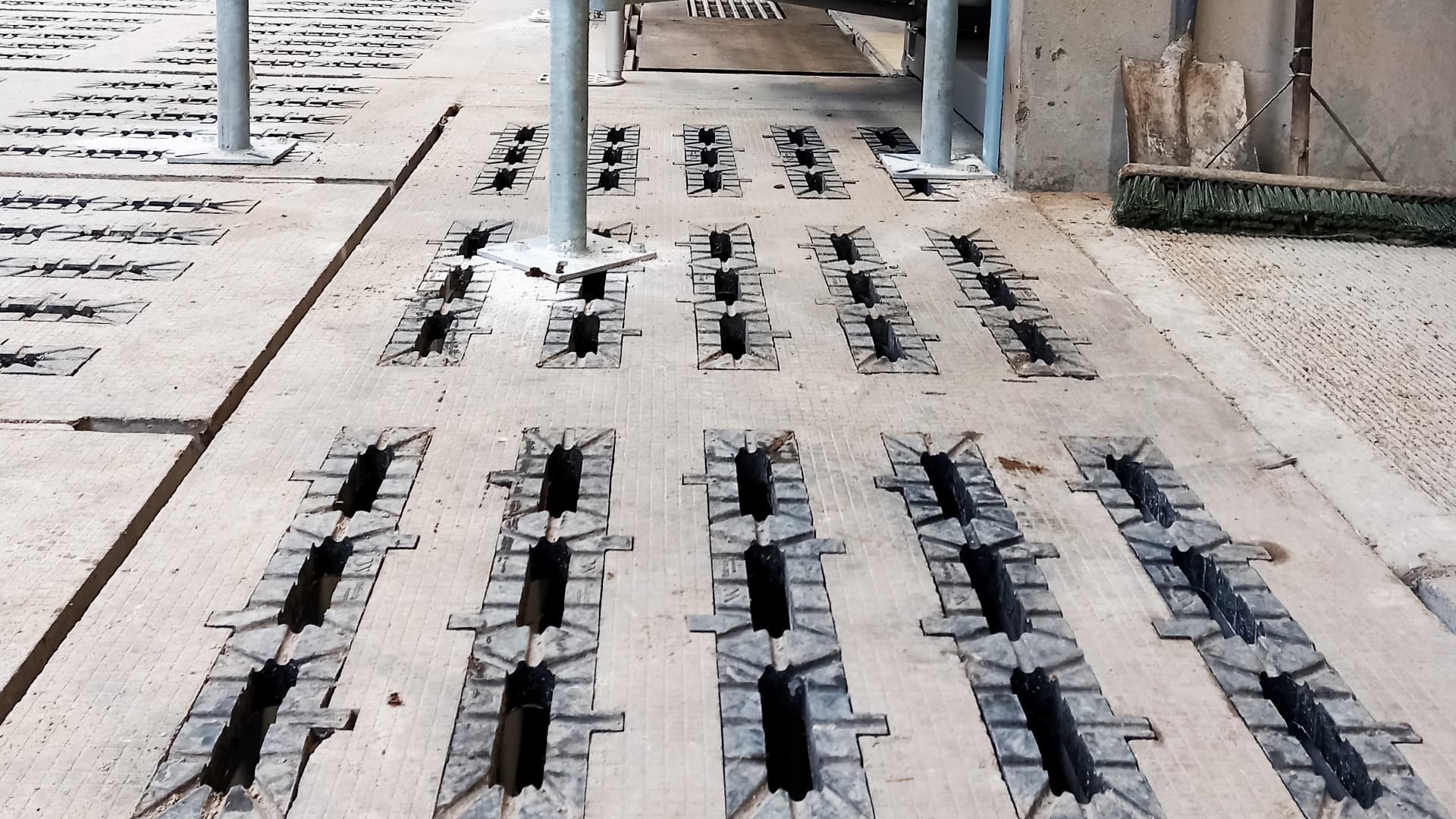
Our own AgriStride systems combine concrete and rubber in a single precast unit, with the rubber element cast into the slat rather than added later.
How these perform in practice
- No loose or bonded overlays
- Consistent surface height and texture
- Improved grip without affecting scraping
- Longer service life compared to mat systems
That’s what we do with AgriStride: we supply integrated slat systems and pick the right one for each part of the shed, instead of using the same thing everywhere.
How Flooring Layout Influences Performance
Layout plays a major role, particularly in larger or higher-throughput sheds. Material choice has a high impact, but alone doesn’t determine how flooring performs.
Passage Width and Cow Flow
Narrow passages tend to increase pressure on cattle movement, especially around feeding areas and parlour exits.
In wider layouts, we generally see:
- Better cow flow
- Fewer hesitation points
- More consistent use of space
Floors in these spots need to have the same grip all the way across. If the surface changes suddenly, cows tend to slow down or bunch up.
High-Traffic Areas
Some parts of the shed take significantly more wear than others:
- Parlour entrances and exits
- Collecting yards
- Main feed passages
These spots need flooring that’s all about traction and durability. Slips here are more likely to cause injuries because of the speed and number of animals.
Integrated systems like AgriStride Vario & Classic are typically used in these zones to support confident movement while maintaining effective scraping.
Standing and Loafing Areas
Cows stand for long stretches in cubicle passages and loafing areas. The flooring here needs to balance a few things:
- Comfort underfoot
- Resistance to wear
- Ease of cleaning
If the surface is too rough, hooves wear down faster. If it stays wet, hooves get soft and infections are more likely. The key is to have enough grip and good drainage.
Materials and Construction: What Makes Flooring Last
When you’re comparing flooring systems, it’s important to look closely at what materials are used and how each unit is built.
Concrete Specification
For livestock flooring, concrete needs to handle:
- Livestock weight
- Machinery loads
- Repeated scraping and washdown
You need high-strength concrete with a consistent finish. If the concrete is poor quality or poured unevenly, it wears out fast, especially at the edges and in busy areas.
All AgriStride units are precast to British Standards, ensuring uniform strength and surface finish across large installations.
Rubber Components
If you’re using rubber, both its quality and how it’s built into the floor make a difference.
Key factors include:
- Correct hardness for grip and durability
- Resistance to ammonia and cleaning chemicals
- How it’s fixed into the unit
When the rubber is built in, you avoid common problems like glue lines or mechanical fixings, which are usually where things start to break down.
Scraping, Cleaning, and Day-to-Day Use
The flooring has to fit how you actually run the shed.
Scraping Performance
If the floor isn’t designed well, you’ll get residue left behind, even if you scrape regularly.
In practice:
- Slot orientation affects how well slurry clears
- Wide spans benefit from diagonal or chevron layouts
- Consistent surface height reduces scraper wear
Systems like AgriStride Vario were developed specifically for wider passages, improving cleaning efficiency without compromising traction.
Hygiene and Moisture Control
Wet floors contribute to:
- Higher ammonia levels
- Dirtier animals
- Increased hoof problems
When urine drains quickly and the surface stays drier, integrated slat systems help keep the shed cleaner and the air better.
Selecting Flooring Based on Use, Not Habit
One of the best ways we’ve seen is to zone the shed and pick flooring based on what each area needs.
This often means:
- One type of slat in high-movement areas
- Another in wide scrape passages
- Different solutions in external yards
Instead of just picking one product for everything, it works better to choose flooring based on what it needs to do and how much wear it’ll get.
Conclusion
Cattle flooring is a big part of how well a shed works. The right system helps with welfare, makes daily jobs easier, and lasts for years. The wrong choice usually leads to problems that are hard and costly to fix later.
If you know the different flooring types, how layout affects cattle, and how materials hold up in real life, you can make better choices when you’re planning a shed.
At Wolfenden, we look at cattle flooring as part of the whole building, and we supply integrated solutions like AgriStride where they fit best. Our goal is simple: floors that work well for both cattle and the people looking after them.
Further details on integrated slat systems can be found on our website.
FAQs
1. Is slatted flooring suitable for all dairy sheds?
Most modern dairy sheds use slats in some form, but slot design, surface finish, and layout need to suit herd size and management style.
2. Are rubber mats still a good option?
They can improve comfort in the short term, but often introduce maintenance and hygiene challenges over time.
3. How important is non-slip finish?
Very. Loss of traction is a common cause of injury, particularly in high-traffic areas.
4. Can different flooring systems be used in the same shed?
Yes. Zoning flooring by use area is often the most practical approach.
5. Does flooring choice affect cleaning time?
It does. Slot layout, surface consistency, and drainage all influence scraping efficiency and washdown effort.