
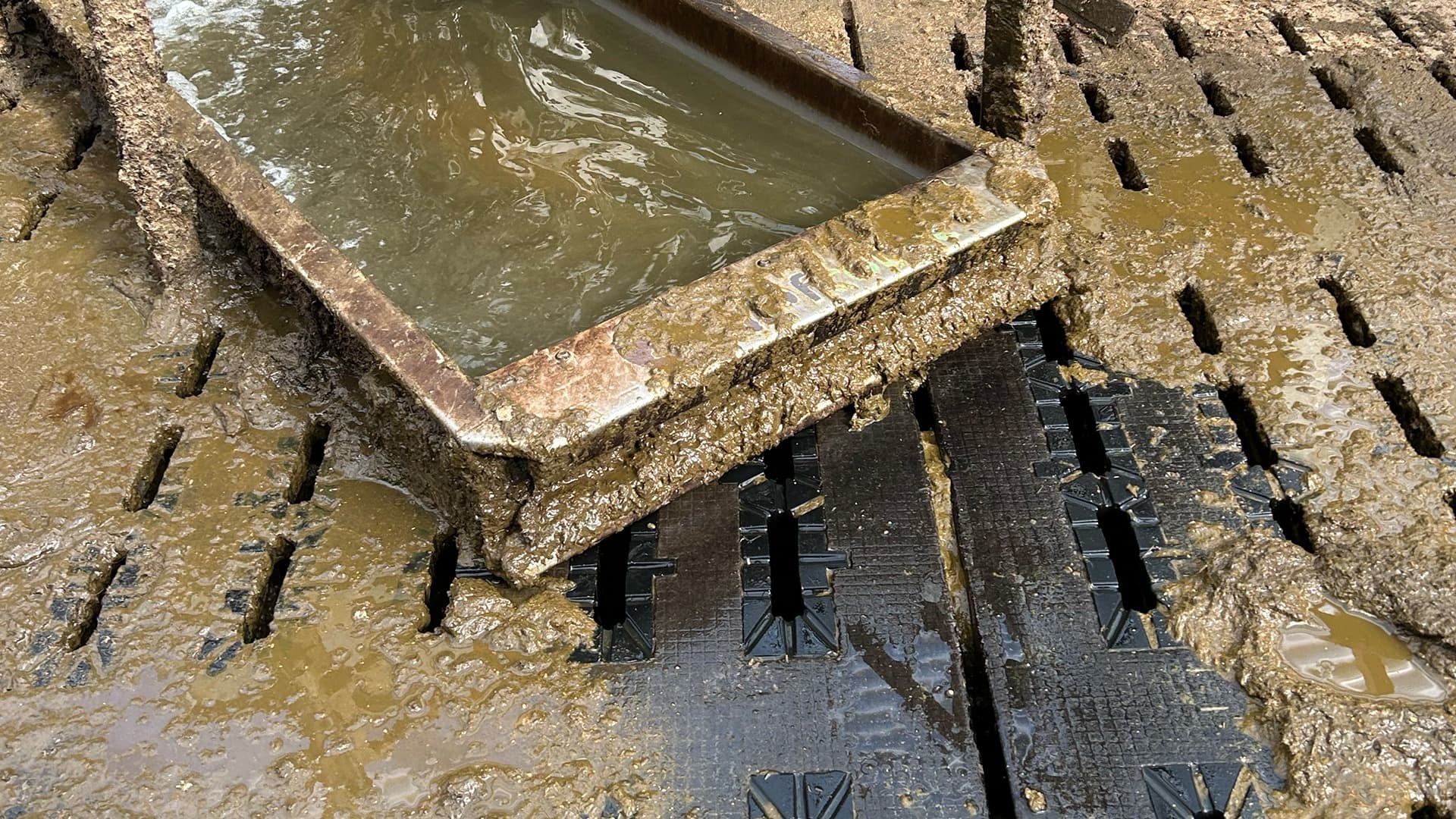
Slurry handling and flooring integration in cattle housing
Slurry handling in cattle sheds usually goes unnoticed until there’s a problem. If it’s working, you don’t think about it. If it isn’t, you’ll spot wet floors, spend more time scraping, notice stronger smells, and see cows getting dirtier.
In our experience, most slurry issues start at the floor, not with the system itself. Flooring and slurry handling go hand in hand. If they’re designed separately, weak spots show up fast. That’s why more people are looking at integrated slat systems like AgriStride instead of just adding rubber mats to concrete later.
Here, we’ll look at how slurry handling and flooring work together on real farms, where things often go wrong, and how using an integrated approach can make sheds easier to run in the long term.
Slurry Handling Begins at the Floor
A big tank or pit won’t help if slurry isn’t clearing off the floor. If scraping leaves material behind or liquid doesn’t drain, you’ll get problems no matter what the rest of the system looks like.
On farm, you’ll see this as wet floors after scraping, slurry bridging over slats, or build-up along kerbs and edges. Scrapers can’t keep contact if the floor isn’t even, so you end up with missed spots that need to be done by hand.
Usually, the scraper isn’t the problem. It’s more about the floor design, how even the surface is, or whether the layout suits the way you’re scraping.
Common Slurry Systems Used in Cattle Housing
Before we get into flooring integration, it’s worth looking at the main slurry systems used in dairy and beef sheds.
Underfloor Slurry Storage with Slatted Floors
This remains the most common arrangement in housed cattle systems. Slurry drops through the slats into an underfloor tank, with the floor either scraped regularly or left to self-clear depending on stocking levels and management.
For this setup to work, the details count. Slot width and direction affect how slurry drops through. The floor needs to stay level so scrapers work right. Most of all, the slats have to stay open and clear.
If clearance isn’t right, slurry sits on the surface, floors stay wet, and ammonia levels go up.
Scraped Solid Floors with Channels
You’ll still find scraped solid floors in older sheds and some beef units. Slurry is pushed along the floor into channels that run to a pit.
These systems work, but they depend on good floor slopes and regular scraping. If the slope isn’t right, wet spots remain. Over time, you spend more time cleaning, and it’s harder to keep the shed even.
Hybrid Layouts
A lot of new sheds use both slatted and solid floors. This can work, but the changeover points are where slurry acts differently. In practice, it’s the transition areas, not the main floor, where issues usually start.
Where Slurry Handling Commonly Starts to Struggle
No matter the building or layout, the same trouble spots keep showing up.
Uneven or inconsistent floor surfaces are one of the most common causes. When floor height or texture varies, scrapers don’t sit evenly, leaving residue and increasing blade wear. Over time, this leads to more manual cleaning and additional maintenance costs.
Slot direction matters more than you might think. Straight slots can let slurry sit between scraper runs, especially in wide passages. If slots don’t line up with the scraper, clearance gets worse. That’s why diagonal or chevron patterns are now common in wide passages.
High-traffic spots are another common problem area. Parlour exits, collecting yards, and feed passages see more slurry because of increased animal movement and numbers. When drainage isn’t good, floors stay wet, cow slipping risk goes up, and cleaning takes longer.
You need both grip and drainage.
How Flooring Design Supports Slurry Management
Good slurry handling is usually the result of getting several small details right at floor level rather than relying on a single fix.
Surface drainage is key. The faster liquid leaves, the drier the floor. Slot spacing, slot shape, surface texture, and rubber inserts all play a part. With integrated systems, these are designed together, not added later.
Scraper compatibility also matters - automatic scrapers perform best on consistent surfaces, and in wider spans, diagonal layouts tend to reduce resistance.
Build-up along edges is another common problem; slurry collects at kerbs, around posts, or where services run.
Integrated Flooring Systems - AgriStride
More sheds now use integrated concrete and rubber slat systems when slurry efficiency and long-term use matter. Instead of adding mats or coatings, these systems are built so the surface stays the same as the floor wears.
You get grip without blocking slurry flow, and drainage stays open. This helps avoid the maintenance problems that come with add-on fixes.
Using Different Flooring in Different Areas
Most new cattle sheds don’t use just one type of flooring everywhere.
In busy areas like parlour exits and raceways, we usually go with AgriStride Moov. The layout keeps cows moving and lets slurry clear with regular scraping.
For wide scrape passages, AgriStride Vario is the usual choice. The diagonal pattern helps slurry move evenly instead of pooling in the middle.
For general housing, AgriStride Classic balances drainage, durability, and comfort underfoot.
Using different flooring in each area helps the slurry system work more consistently across the shed.
Ammonia, Hygiene, and Air Quality
Slurry left on the surface contributes directly to ammonia release. Over time, this affects air quality in the shed and cow cleanliness.
In practice, drier floors mean less ammonia, better air, and cleaner hooves. Integrated slat systems help by letting urine drain fast and keeping a surface that scrapes well.
Maintenance and Long-Term Performance
Slurry systems run every day, and if the floor changes shape or wears out, it will affect how well the system works.
Over time, rubber overlays can break down, concrete edges can wear and trap slurry, and you end up cleaning more by hand. Integrated systems reduce risks by avoiding loose parts and keeping the surface stable for longer.
Designing Slurry Handling into the Build
The best slurry setups are planned from the start. Scraper type, passage width, slat direction, and access for checks all affect how the system runs once the shed is in use.
When flooring and slurry handling are designed together, sheds are easier to run and more predictable every day.
Conclusion
Slurry handling starts at the floor, not the tank. The design, layout, and materials all affect how well slurry moves, how clean the shed stays, and how much work you have to do.
That’s the thinking behind integrated flooring like AgriStride, where slurry handling, grip, and durability are all designed together, not as separate parts.
Further details on integrated slat systems can be found on our website.
FAQs
1. Do integrated slats affect slurry flow?
No. They’re designed to maintain drainage while improving grip and durability.
2. Are diagonal layouts better for scraping?
In wider passages, they often help slurry clear more evenly and reduce scraper resistance.
3. Can integrated flooring be used with existing slurry tanks?
In most cases, yes. Flooring can usually be matched to existing storage and scraping systems.
4. Does flooring choice affect ammonia levels?
Drier surfaces generally lead to lower ammonia release and better air quality.
5. Is flooring particularly important in parlour exits?
Yes. These areas combine high movement and heavy slurry loads, so traction and drainage are critical.