
The Flooring Decisions That Shape More Than Just Cow Comfort
When people talk about flooring, the main question is usually whether the cows are comfortable. That is important, but it is not the whole story. We think a better question is: what does the floor need to support in the entire shed?
When people talk about flooring, the main question is usually whether the cows are comfortable. That is important, but it is not the whole story. We think a better question is: what does the floor need to support in the entire shed? Flooring affects how animals move, how much grip they have, how easily slurry is cleared, cleaning time, labour, confidence on slats, and the building’s long-term performance. That is why we see flooring as a key part of daily operations, not just a finishing touch.
This change in thinking is important for both forward-thinking farmers and consultants. The right flooring makes daily routines easier and more predictable. The wrong choice can cause problems with cow movement, scraping, hoof health, and hygiene. Usually, these issues happen when the flooring type, layout, surface, and daily use do not work well together.
Cow comfort is only the starting point
Cow mats or cattle mats became popular for a reason. They solved a real problem. Hard floors can be tough on cows, so farmers wanted to make them softer and more comfortable. That still makes sense, but in today’s dairy sheds, comfort alone does not define good flooring.
A floor might feel softer but still cause other problems. It can hold moisture, be hard to clean, or make cows less sure of their footing in busy areas. It can also make cleaning harder or create uneven conditions in the shed. Comfort matters, but it should not be the only thing we look at. Good flooring needs to work well when the shed is busy and under pressure.
Movement changes the whole feel of a building
A good floor is easy to spot by watching how cows move on it. When cows feel safe, they walk naturally, use the space well, and do not hesitate in important areas. If they do not feel safe, you will notice right away. They take shorter steps, slow down, crowd together at certain spots, or avoid moving through parts of the shed.
Areas like parlour entrances, exits, collecting yards, feed passages, and loafing spaces all work differently, but they all rely on cows feeling steady on their feet. In these places, the floor directly affects how smoothly things run, where stress builds up, and how well the shed handles daily work.
Cleaning efficiency is a flooring issue too
People often think cleaning problems are just about management. Sometimes that is true, but just as often, the floor is the real issue. The way slots are placed, the evenness of the surface, drainage, and layout all affect how well slurry is cleared and how much mess is left. If the floor does not help with cleaning, you end up with more work, wetter floors, and a shed that is harder to keep clean. In the long run, this can lead to more health issues and higher vet bills.
Discussions about cattle mats should be more balanced. Mats can make things better at first or even provide a short-term or mid-term solution, especially if you want to soften a hard floor without replacing it. But over time, they can cause problems like edges lifting, moisture getting trapped underneath, and more cleaning work.
That does not mean mats are always a bad choice; circumstances may justify the utilisation. It just means their value should be judged based on daily use, not just how they feel on day one.
Flooring choices affect labour more than farms expect
Farmers don’t always link flooring directly to labour, but the connection is clear once you notice it. A shed that is easy to scrape, stays dry, and lets cows move easily is simpler to manage. If the floor has awkward spots, wet areas, or uneven grip, it takes more work every day.
All that extra work adds up. It shows in scraping, washing down, maintenance, and time spent fixing problem areas. When you pick the right flooring, the benefits go beyond cow comfort. It also means the team spends less time correcting issues. We think this is one of the most overlooked parts of choosing flooring.
Longevity is about more than whether the floor survives
When people talk about durability, they often mean whether the floor remains structurally intact. That matters, but it is only one part of longevity. A floor can technically last, but it can still become more difficult to work with over time. It can wear unevenly, lose grip, create cleaning issues or contribute to a more demanding daily routine.
To us, real longevity means the floor keeps supporting the shed properly. That includes keeping a good surface, handling scraping and washing, and balancing grip, drainage, and wear. It also matters how the materials are put together. If parts are added later, they often fail sooner. When the floor is designed as a complete system from the start, it is easier to keep things consistent.
Why confidence on slats matters so much
Confidence on slats is important. It affects how the whole housing system feels to the cows. Slats work well for slurry when properly designed and finished, but comfort and movement depend heavily on the surface, slot design, and layout. If these are not right, the floor might drain well, but still make cows feel less secure.
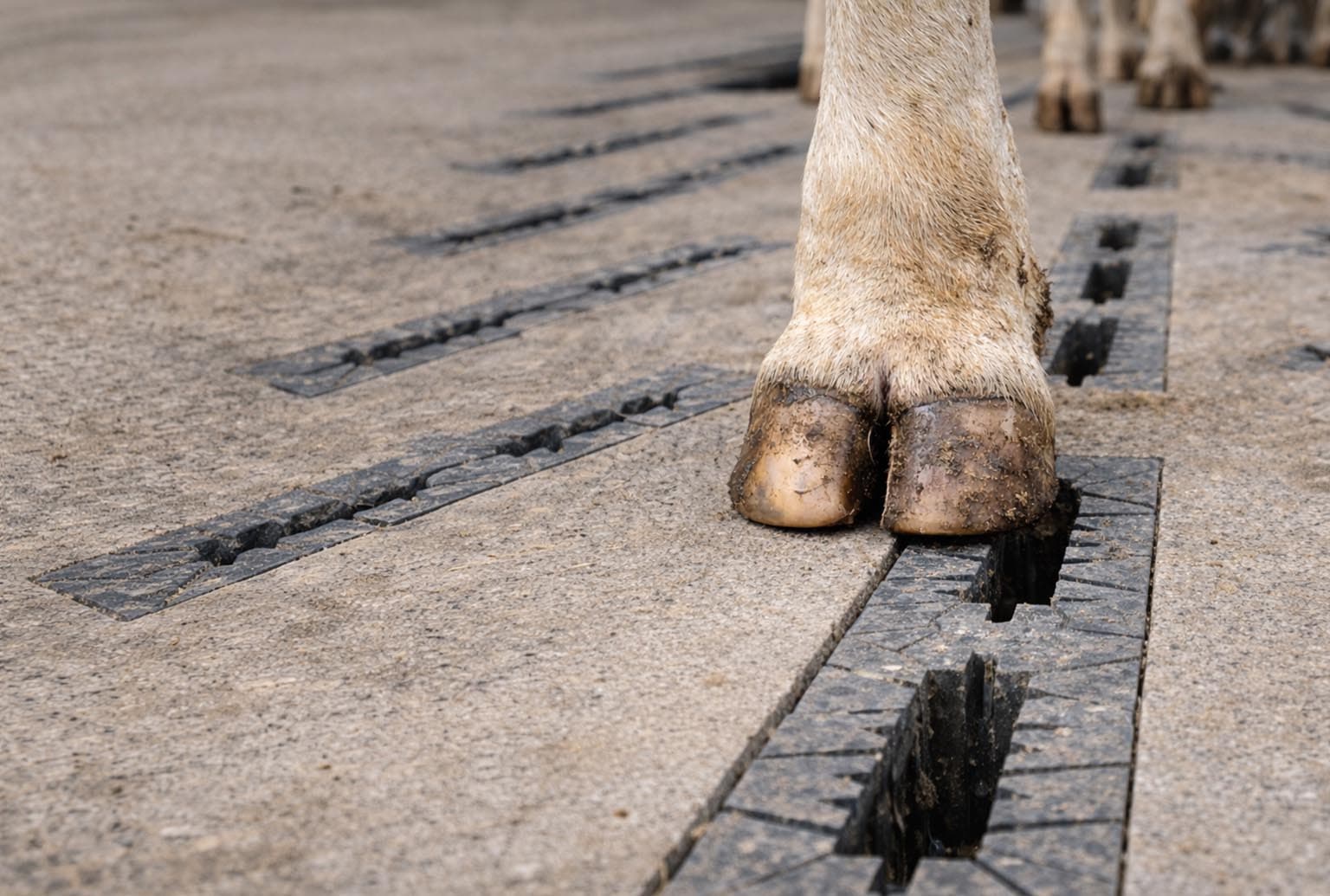
This is why integrated flooring solutions are becoming more important. Our Agristride, hybrid flooring, for example, combines concrete and rubber into a single precast slat rather than adding layers later. The main benefit is not just softness, but consistency. The height, texture, and grip are built in from the start, helping cows move confidently and making scraping easier. We created AgriStride with this in mind, using slip-resistant rubber and strong concrete to support natural movement, hoof health, and cleaner daily performance on UK farms.
The best flooring decisions are made by use, not habit
We often see that flooring works best when chosen for each area. A wide scrape passage needs something different from the floor than a collecting yard does. A parlour exit is not the same as a quiet internal area. Still, many sheds use flooring based on old habits instead of what each space really needs.
We believe better decisions start with better questions. Instead of asking what is standard, it is more helpful to ask what each area needs from the floor. Does it need more grip, faster cleaning, better durability, or more confidence under pressure? When you start there, the flooring choice usually improves, whether you pick cow / cattle mats, or a hybrid system.
Why the best flooring decisions now need to look further ahead
A big change in dairy housing is that flooring should not just be judged by what it fixes now. It also needs to prepare the shed for the future. Expectations for welfare, hygiene, movement, easy management, and environmental impact are rising. This pressure comes from both the farm and the wider supply chain. AgriStride was designed with this in mind, focusing on welfare, reducing lameness, lowering ammonia, and improving daily performance.
This is important for both farmers and consultants. Choosing flooring now shows how much a project values long-term results. It shows if the shed is designed for future needs or just sticking to old ways. In new builds, it is harder to justify using the same old options when there is a chance to get the floor right from the beginning.
We believe hybrid flooring should now be a higher priority. It is not that other types have no use, but new sheds need to deliver more in welfare, confidence underfoot, cleaning, and long-term use. When these are the goals, it makes sense to choose flooring that balances these needs from the start, instead of making changes later.
That shift is also being reflected across more industry bodies. With AgriStride rubber inserts now eligible under DEFRA grant FETF234A, hybrid flooring is increasingly being recognised not just as a comfort-led upgrade, but as an integral investment in the long-term performance of modern farm buildings.
Why that reflects well on both farmers and consultants
For forward-thinking farmers, choosing better flooring in a new shed shows they care about more than just the initial cost. It proves they are thinking about how the shed will work every day. It means movement, cleanliness, labour, and long-term cow confidence are treated as important parts of the design - not afterthoughts.
For consultants and advisers, making this choice shows good judgment. It proves they see flooring as part of the whole building’s performance, not just a separate product. As standards go up, this approach will set apart projects that are just okay from those that are truly well planned and ready for future demands.
Planning for the future
The most important flooring decisions are not only about softness and comfort. They affect movement, cleaning, labour, confidence on slats, long-term wear, and how well the building works every day. That is why we think flooring should be a key part of shed design, not just an obligatory process choice.
We’re also not suggesting that cow mats and cattle mats are not still useful in the right situations, especially when immediate comfort or easy retrofitting is needed. But the trend is clear. In new sheds, the focus should be on flooring systems that meet the needs of modern dairy housing from the start.
We believe hybrid flooring like Agristride is becoming a bigger, more prevalent part of the discussion. As the supply chain expects more, both farmers and consultants will be judged on how well their buildings perform over time. In this setting, choosing hybrid flooring for new projects is not just a technical decision. It shows forward thinking, higher standards, and a better understanding of what good housing needs today.
FAQs
Do flooring decisions affect more than cow comfort?
Yes. Flooring also affects movement, cleaning efficiency, labour, grip, wear and day-to-day shed performance.
Are cattle mats still useful?
Yes, in the right setting. They can improve comfort and traction, especially in retrofit situations, but they can also create maintenance and hygiene trade-offs over time.
Why does confidence on slats matter?
Because cows that feel less secure underfoot tend to hesitate, shorten their stride and move less consistently through key areas of the shed.
Why is hybrid flooring becoming a higher priority in new builds?
Because new-build sheds are being asked to deliver more across welfare, cleaning, movement and long-term performance from day one.