
How Farm Flooring Affects Cattle Movement and Behaviour
A cow’s route through a dairy building involves more than walking from one area to another. Leaving the cubicles, turning towards the parlour and returning to feed may involve different surfaces, gradients and busy crossings. Each places different demands on footing.
Effective agricultural flooring needs to withstand daily livestock use, scraping and cleaning while providing secure footing for cattle. Following their daily journey helps identify what each surface needs to provide for natural, confident movement. At AgriStride, that understanding shapes our approach to flooring for different areas of the dairy unit.
Start where cattle join the passage
As cows leave the resting area, watch how they step into the passage and establish their stride. Repeated hesitation, shorter steps or avoidance of a particular patch can indicate a point worth investigating, especially if movement changes when the floor is wet.
Look along the route cattle actually use. Wear may be concentrated around cubicle exits or along a familiar walking line, while slurry can obscure surface texture and damaged areas. Assessing the floor during normal use gives a more useful picture than inspecting it only when freshly cleaned.
These observations need context. Hoof condition, lighting, nearby activity and pressure from other animals can also influence movement. The aim is to identify where behaviour changes, then investigate the surface alongside its surroundings.
Follow the route through turns and crossings
As the passage reaches a corner or junction, the demands change. Cattle need room to adjust their direction and place their feet, often while other animals are approaching. A gate, narrow opening or wet patch can make that movement more difficult.
Watch where slowing begins. If cows hesitate before the turn, inspect the approach as well as the corner itself. Polished areas, uneven repairs, changes in gradient and accumulated slurry may extend across the route.
The layout and floor need to work together here. Flooring improvements should be considered alongside any gate positions or narrow crossings that restrict movement, so cattle can benefit from secure footing and sufficient room to turn. Understanding how the area is used helps establish which changes deserve priority.
Notice what changes around milking
The route may then lead into a collecting area or towards a milking robot. Cattle move differently in these spaces: standing, taking short steps and repositioning while other animals are nearby. Flooring needs to accommodate this use while remaining compatible with cleaning and slurry removal.
Follow the movement through the entrance and beyond the exit. A suitable surface beside the milking equipment cannot resolve an awkward threshold or worn crossing further along the approach. Equally, cows leaving may immediately encounter a turn or a change from newer flooring to older concrete.
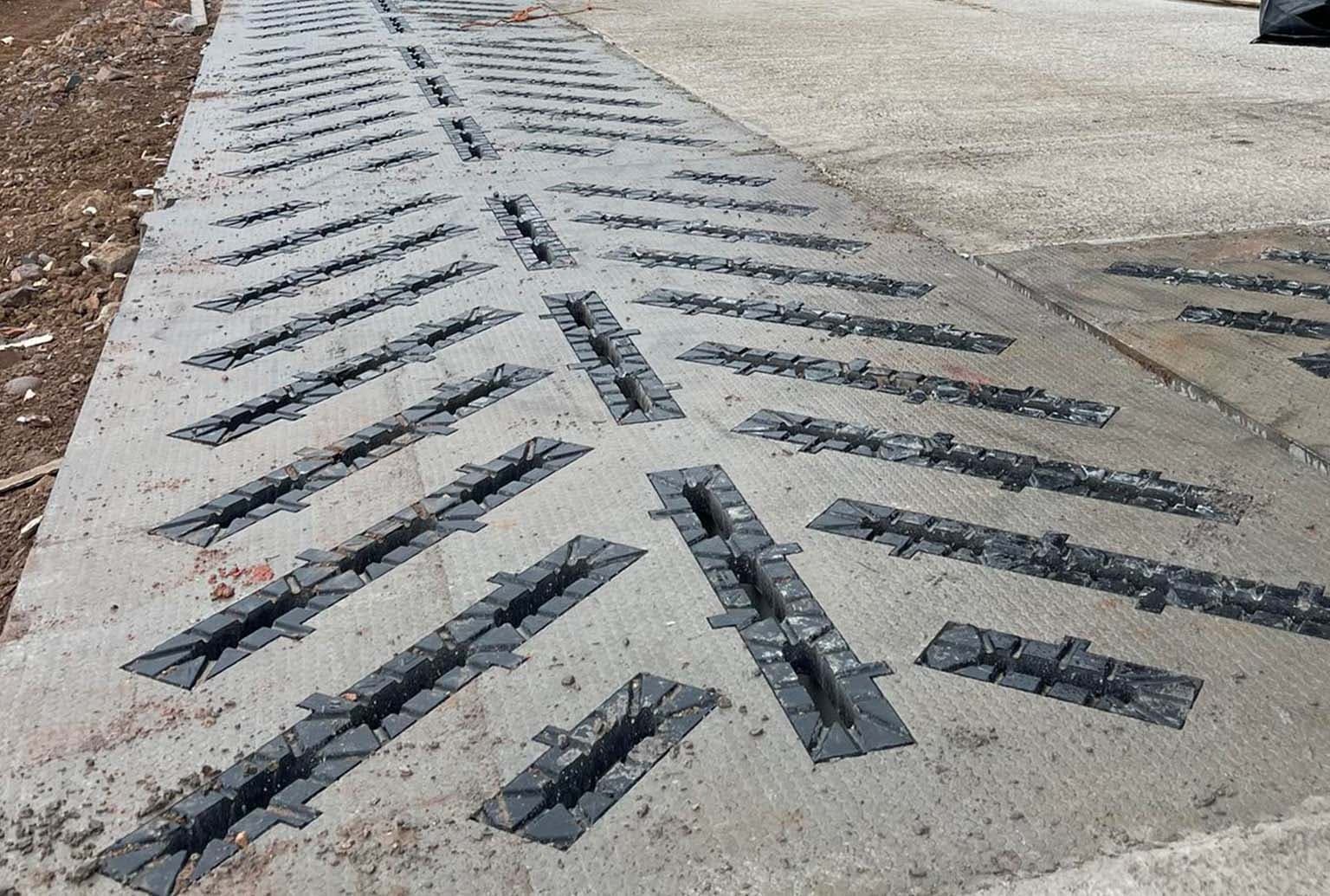
AgriStride Moov is designed for cattle race channels and entrance and exit points around parlours, robots and collecting yards. Its suitability depends on the individual layout, supporting structure and cleaning arrangements.
Continue back towards feed, water and rest
The return journey can reveal issues that are less apparent on the way to milking. Animals may separate towards feed, water or cubicles, crossing scraper routes and meeting cattle travelling in another direction.
Pay particular attention where flooring materials meet. Older concrete, slatted areas and rubber surfaces can form part of the same route, but their junctions need careful consideration. Changes in level, damaged edges or differences in grip may interrupt an otherwise straightforward passage.
Observe these areas at both busy and quieter times. A crossing that works comfortably for a few animals may become congested when a group moves through it. Looking at where the slowing starts helps distinguish the original difficulty from the queue behind it.
Use the journey to guide flooring decisions
By the end of the route, the priorities should be more specific than a general concern about grip. One area may need better slurry clearance, another a more suitable transition, while a busy entrance may require both flooring and layout changes.
This is how farm flooring decisions can support animal welfare while remaining practical for the people managing the building. Grip, comfort, drainage and cleaning need to be considered together, alongside the time cattle spend standing or walking in each area. Where machinery is also used, the specification needs to account for those loads.
Our AgriStride hybrid flooring range combines precast concrete with integrated rubber elements, with options designed for different livestock flooring applications. Discussing the route as a whole helps us understand where a particular system may fit and how it needs to connect with adjoining areas.
If you are reviewing an existing building or planning a new one, bring us your layout and observations of where movement changes. Alongside passage dimensions, cleaning arrangements and structural requirements, these provide a useful starting point for discussing suitable flooring.
Frequently asked questions
Does hesitation mean the floor needs replacing?
Not necessarily. First establish whether wear, contamination, drainage or an uneven junction is contributing. Lighting, gates, social pressure and hoof condition should also be considered. The appropriate response may involve maintenance or a targeted alteration.
Should the same flooring be used throughout the building?
Different areas place different demands on the floor. A straight scrape passage, a waiting area and a parlour exit may need different arrangements. The important point is that each surface suits its use and connects appropriately with the next.
Can new flooring be installed alongside an existing surface?
It may be possible, subject to the existing structure and installation requirements. Levels, supports, drainage and scraper compatibility need checking so the junction works for both cattle movement and daily cleaning.