
Cow Mattresses, Cattle Mats and Hybrid Flooring Slats: What Works Where and Why
People often oversimplify the comparison between cow mattresses, cattle mats, and hybrid flooring.
People often oversimplify the comparison between cow mattresses, cattle mats, and hybrid flooring. In reality, good dairy housing decisions are more complex. These systems are not always direct substitutes, since each one solves different problems in different parts of the shed or fits specific situations better.
Flooring solutions influence how cows lie, walk, turn and queue. They affect grip, slurry clearance, ease of cleaning, hoof condition, and the building's general operational efficiency in daily use.
We believe the real question is not which option is best overall, but which one works best in each area and why.
Cow mattress systems: where they make sense
Cow mattresses, cattle mats, and hybrid flooring are often mentioned in the same broader discussion around cattle comfort, but they are not direct like-for-like options. In practice, they apply to different parts of the building and solve different problems.
A cow mattress is specifically designed to sit on top of either precast or poured concrete cubicles, giving cattle individual lying spaces above the walking level. Cattle mats, by contrast, are typically rubber strips or coverings added on top of concrete slatted floors or solid concrete yards to improve the surface underfoot in walking or communal areas.
That distinction matters. A cow mattress is not a flooring system for passages, scraped areas or communal yard space. It is a cubicle surface designed to support rest and comfort in a very specific part of the shed.
Cattle mats: where they still have a place
Cattle mats are still useful on many farms, especially when the goal is to improve a concrete or slatted floor without replacing it completely because of cost or logistics. That is often why people choose them. They can make the surface softer, improve traction, and reduce wear, especially in retrofit situations where a farm wants a practical upgrade without major construction.
We see why that is appealing. In the right situation, cattle mats can be a smart short- or medium-term fix. They are especially helpful when an older floor is still usable, but the surface is not ideal anymore.
However, it is important to be clear about the limits of cattle mats. Common problems include mats lifting or curling at the edges, and slurry or moisture getting trapped underneath. Cleaning can become harder, and mats usually do not last as long as the concrete below. So, while cattle mats can help at first, they may lead to more maintenance and hygiene issues over time.
That does not mean cattle mats never work. It means they work best when expectations are realistic and when the wider floor is not being asked to solve too many problems at once.
Hybrid flooring: why it is becoming more relevant
Hybrid flooring is becoming more important because it balances comfort with practical needs in the shed. Modern dairy sheds demand more from their floors than before. The surface needs to feel soft, but also support confident movement, allow for easy scraping, stay clean, and last a long time.
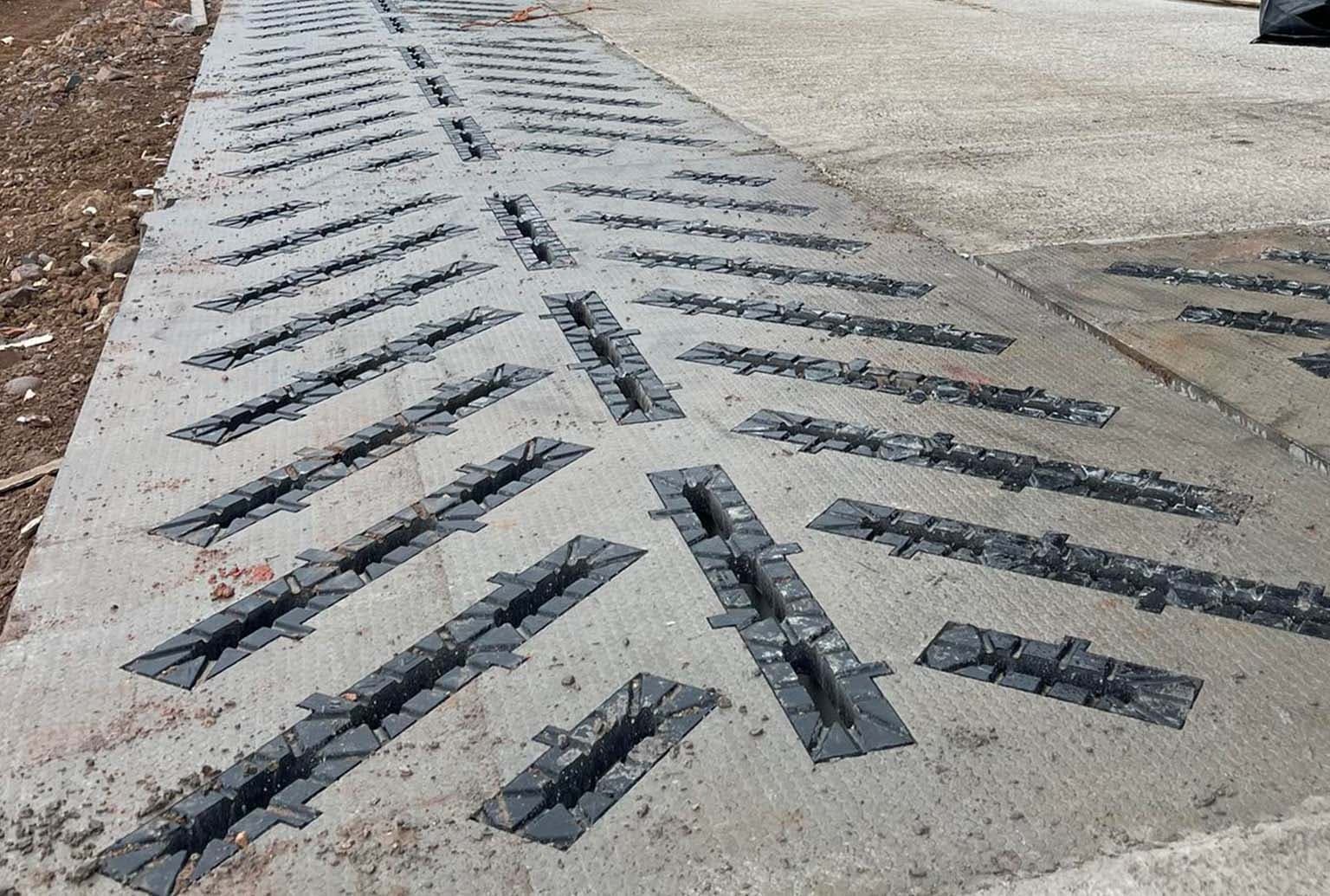
This is where hybrid flooring makes sense. For example, AgriStride combines concrete and rubber into a single precast slat, with the rubber built in rather than added on top. This creates an even surface, avoids loose add-ons, and improves grip without affecting scraping.
For us, this is the main change. Hybrid flooring is not just about comfort; it is about designing farm buildings that focus on comfort, grip, and easy floor management from the beginning. That is why it is more relevant in sheds where comfort, movement, and daily management all matter.
What works where
The simplest way to look at this is by considering each area’s use.
Cow mattresses are designed for cubicles and individual lying spaces, not for general floor areas. They sit on top of either precast or poured concrete beds, which are shaped and sloped to suit cubicle use. In that setting, their job is to improve comfort in the lying area rather than influence how the wider floor performs.
Cattle mats are still useful in retrofit situations or in sheds where the goal is to improve a walking surface without replacing it completely. They are a practical choice for farms that want better traction and a softer feel but are not ready for major changes.
Hybrid flooring is most useful where the floor needs to handle several tasks at once. This includes passages, scraped areas, parlour entrances and exits, collecting yards, and other busy parts of the shed. In these areas, grip, scraping, and long-term use all matter. Our approach is to choose the right system for each part of the shed, not use the same one everywhere.
Why this is really about the whole environment
We think it is more helpful to stop asking which flooring type is best on its own and start asking what good floor performance looks like in a real shed.
This means looking at how cows move, how well the floor clears, how wet it stays, how it wears over time, and how much work is needed to keep things running smoothly. Flooring choices also depend on layout - passage width, traffic, scraper type, and how areas connect, all of which matter. From what we see on farms, flooring problems rarely have just one cause. They usually happen when the flooring type, surface, drainage, and layout do not work well together.
That is why we do not think this conversation should end with a blunt winner. Cow mattresses, cattle mats and hybrid flooring each make sense in the right context, but they are not all being used in the same way. The real value comes from understanding what each one is designed for, where it starts to fall short, and how it fits the wider goals of the shed.
So, what works where and why?
A cow mattress remains a good choice for cubicles and individual lying spaces. Cattle mats are useful when a farmer wants to improve an existing concrete or slatted surface in walking or communal areas without replacing it completely. Hybrid flooring is a more integrated option for modern sheds where movement, grip, cleaning and long-term consistency all matter.
We believe the best flooring decisions are made by looking at each zone, its use, and the long-term results. This is a better way to compare cow mattresses, cattle mats, and hybrid flooring than trying to pick one winner for the whole shed. It also matches how modern dairy sheds really work.
FAQs
What is the main difference between a cow mattress and cattle mats?
A cow mattress is designed to sit on top of precast or poured concrete cubicles, creating individual lying spaces for cattle. Cattle mats are more often used to improve the surface of concrete slats or solid concrete floors in walking or communal areas.
Do cattle mats still have a place in dairy sheds?
Yes. We think cattle mats can still make sense in retrofit situations, especially when a farm wants to improve comfort and traction without replacing the entire floor due to cost or logistical constraints.
Why is hybrid flooring getting more attention?
Because modern sheds often need a floor that balances comfort, grip, scraping performance, and durability at the same time, especially in movement-heavy zones.
Should one flooring type be used everywhere in the shed?
No. Different parts of the shed perform different functions, so they should not all be treated the same. Cubicles need a surface suited to individual lying spaces, while passages, scraped areas and collecting yards need a floor that can cope with movement, grip, slurry clearance and day-to-day wear. The best approach is to look at each zone in context and choose the system that matches how that part of the building is actually used.